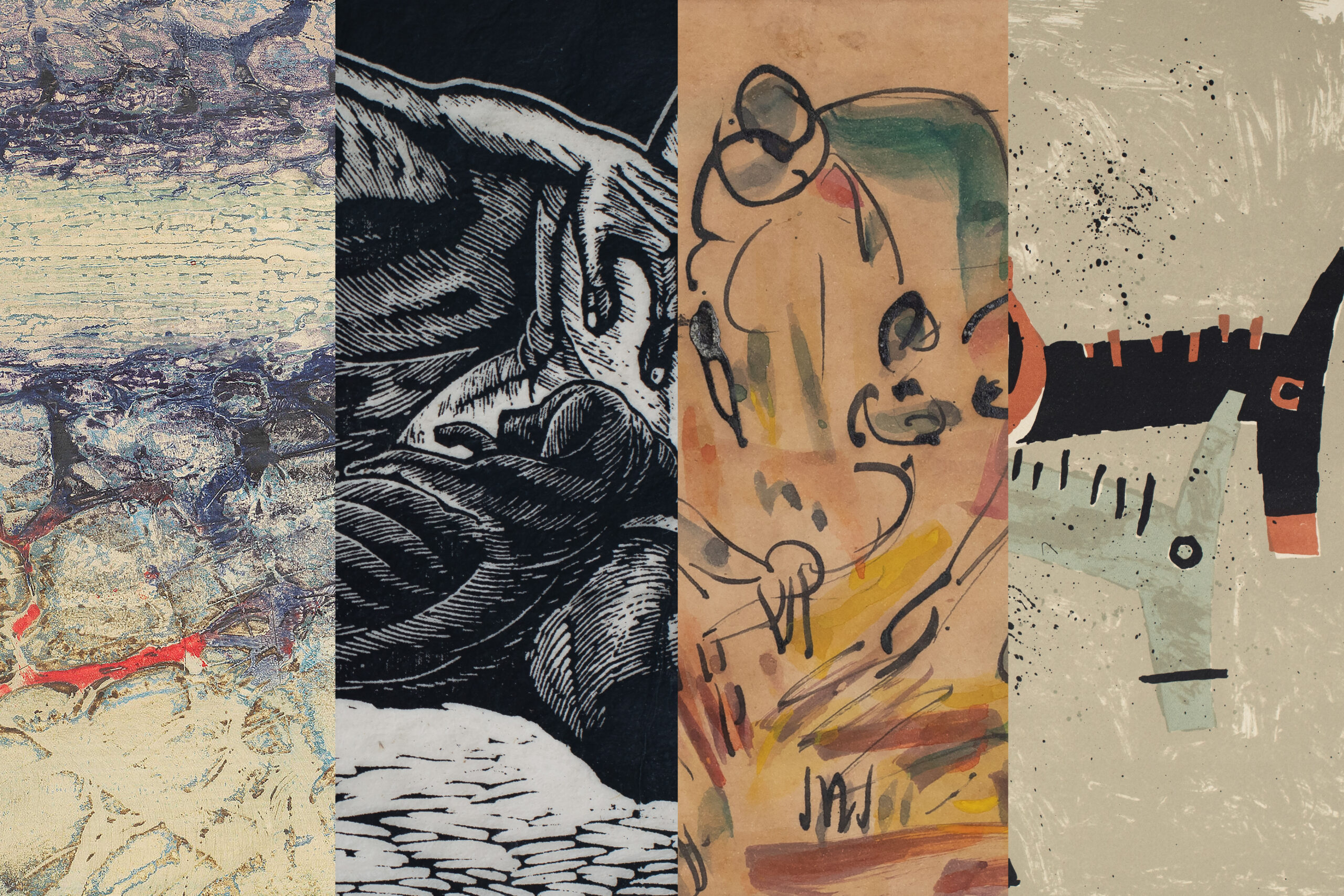
The story of modern Indian art is, in many ways, the story of a nation coming into its own, an age marked by rupture, renewal, and a radical reimagining of form. As India moved through the turbulence of independence and the forging of a new identity, a generation of artists began to break away from academic conventions and nationalist prescriptions. They sought visual languages that were rooted yet experimental, personal yet universally resonant.
These modern masters expanded the very definition of what Indian art could be. Their works, ranging from the lyrical to the confrontational, the contemplative to the avant-garde, chart a remarkable transformation in artistic thought. They observed the world with uncommon clarity: its fractures, its rhythms, its myths, and its quiet intimacies.
To understand Indian modernism is to encounter the artists who shaped it with conviction, courage and relentless inquiry. Below is a guide to some of the most influential modern Indian masters you should know, figures whose practices continue to shape contemporary discourse and inspire generations of artists, collectors and viewers today.
Benode Behari Mukherjee was a pioneering figure in modern Indian art, known for his vast and multifaceted oeuvre, a keen sense of observation, and deep engagement with nature and architecture. His art practice was shaped by a wide spectrum of influences, blending elements of Western modernism with visual traditions from India and East Asia.Despite losing sight later in life, he continued creating, teaching and writing, leaving an enduring legacy.
Francis Newton Souza is one of the most influential figures in the development of modern Indian art. He drew on a wide range of influences, from Western masters like Pablo Picasso and El Greco to Indian history and Christian iconography. Across his oeuvre, there is an undertone of a raw sensuality that can be at times unsettling, erotic, or confrontational. Souza’s genius lies in his bold, evocative, and expressive style, as well as his unrelenting exploration of multiple genres, including religious typology, the female form, and the banality of everyday life.
Kalal Laxma Goud’s practice is reconstructed from his memories, personal observations and key events, transported across a plethora of mediums. Using these memories as significant starting points, Goud often reinterprets and represents the rural landscape of his adolescence. Accompanying these settings are figures of both men and women, animals, flora, and mythical creatures drawn from folklore. His practice is further characterised by having a strong visual language that is explicitly erotic and rural. He works across multiple mediums ranging from printmaking, drawings, paintings, murals and sculptures, which he uses to capture the quintessential elements of the Indian ethos.
A master printmaker and pedagogue, Krishna Reddy’s sense of curiosity and persistence in experimentation has had a transformative impact on the art world. While he mastered the mediums of printmaking and sculpting, his most groundbreaking contribution was the viscosity printing technique, layering colors with extraordinary precision. Over seven decades, he has developed a language that, at its core, probes introspective questions of the complexities of nature, man, and their relationship with the universe.
India’s leading modernist, MF Husain sought to create a language of modernism that was entirely his own. His work drew on centuries of Indian art and culture, its iconography, motifs and mythologies, transforming familiar narratives into powerful visual allegories. His bold, confident lines, combined with a mosaic of colors infused an animated life to his works. His artistic explorations were not limited to painting, as he explored a variety of media such as printmaking, toymaking, furniture, design, and film.
Ram Kumar’s journey towards developing a contemplative, innovative yet distinct visual language cemented his position as a key modernist in the world of art. Drawing from experiences, memories and observations, Kumar portrayed people and created worlds of cities and landscapes, sometimes mere configurations of shapes and colors, that were univocally his own. Throughout the evolution of his artistic language, ranging from his early figurative explorations to his later abstract expression, a profound meditative quietude became the unifying thread across his entire body of work.
Ramkinkar Baij was India’s foremost modernist sculptor who broke away from the staunchness of academic realism and suffused his work with avant-garde animation, making it characteristically individualistic in style. While his sculptures hold a distinct place in Indian modern art, Baij’s paintings across mediums present the same experimental vitality. His works stand out for bringing the lives of the working class and tribal communities into his subject matter with expressive, bold brushwork, vibrant colors, and raw emotional intensity.
Somnath Hore was a modernist with a cause. His extensive oeuvre, revolving around his empathetic response towards the disintegrating state of the human condition and the physical and psychological effects of conflicts, left an indelible mark on Indian art and history. His biggest contribution was his observations and documentation of atrocities committed towards innocent people because of the poor policies of the imperial colonizers. These themes continued to guide his art across innumerable mediums, despite taking a step back from an active political life.
An internationally acclaimed artist, Zarina’s practice encompasses prints, drawings and sculptures, unified by a minimalist aesthetic and a deeply personal engagement with themes of home, exile, memory, and displacement. Influenced by her own nomadic life across continents and her enduring interest in architecture, geometry, and language, her work often reflects a poetic mapping of loss and longing. Paper became central to her artistic expression, serving as both medium and metaphor throughout her career.
Beyond these figures, several other modernists were equally instrumental in shaping India’s artistic landscape. Tyeb Mehta introduced a taut, electrifying visual tension through his disciplined forms and iconic diagonals, while V. S. Gaitonde pushed abstraction toward an almost spiritual quietude, creating surfaces that feel meditative and deeply immersive. Akbar Padamsee brought rigorous structural thinking to his portraits, metascapes and monochromes, balancing intellectual clarity with painterly richness. Krishen Khanna turned his gaze toward human gatherings and shared rituals, infusing scenes of everyday camaraderie with empathy and warmth. K. H. Ara captured ordinary life with a direct, unadorned honesty, and H. A. Gade interpreted landscapes and cityscapes with bold colour and rhythmic geometry, echoing the dynamism of a rapidly changing nation. In sculpture, S. K. Bakre expanded the possibilities of modernism into three dimensions, giving material form to the movement’s evolving sensibilities. Together, these artists broadened the scope of Indian modernism, offering diverse vocabularies that continue to shape its narrative today.
The legacies of these artists extend far beyond their individual bodies of work. Together, they forged a visual vocabulary for a changing nation, one that embraced complexity, contradiction, and the full range of human experience. Their practices remind us that modernism in India was never a monolith; it was a constellation of voices, each rooted in singular histories yet expansive in imagination.
To revisit their work is to rediscover the foundations of modern Indian art, and to recognize how powerfully these artists shaped the aesthetic, intellectual and emotional contours of the world we inhabit now.
December 12, 2025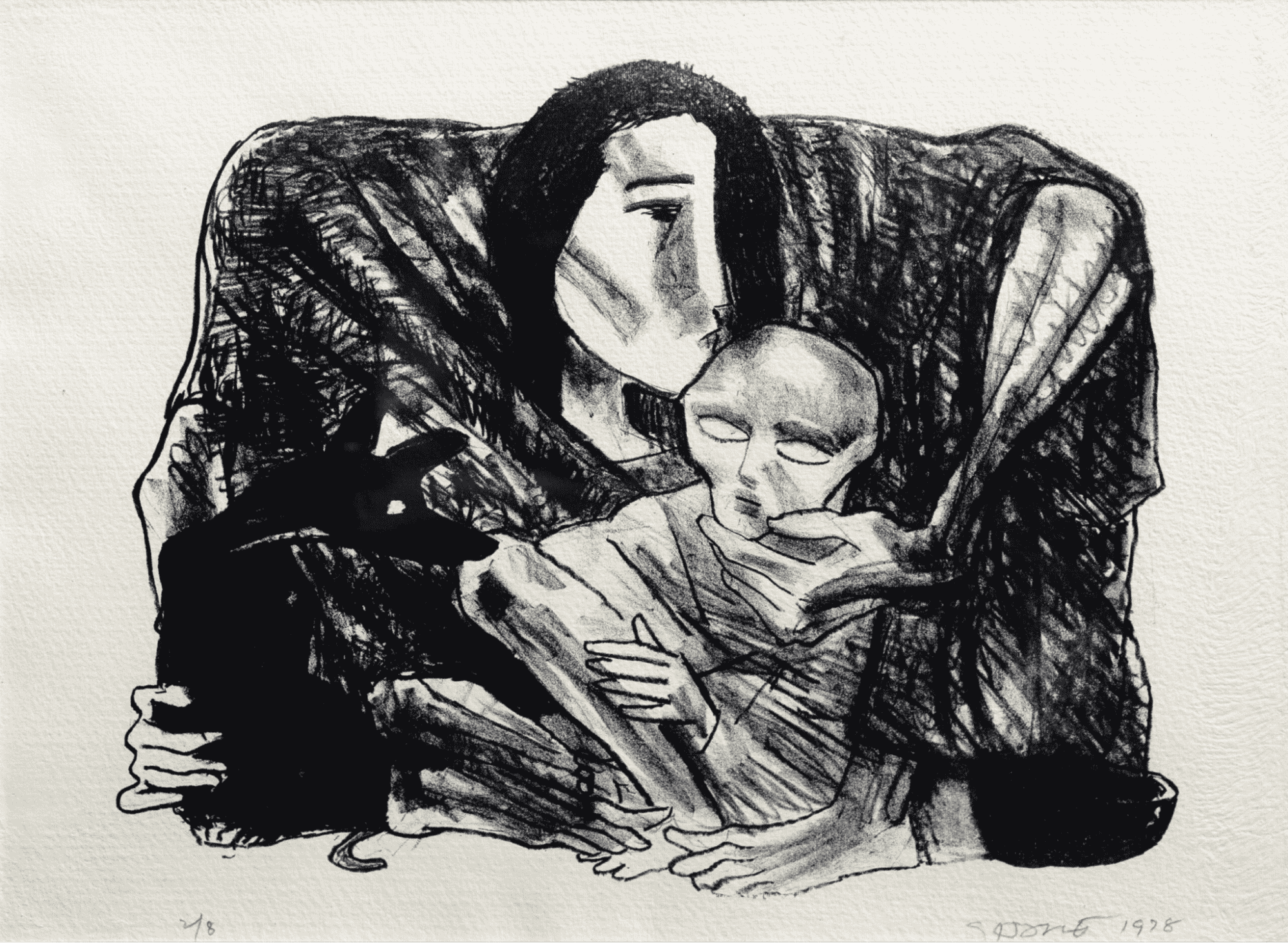
“Art washes from the soul the dust of everyday life.” – Pablo Picasso The wonder of experiencing and engaging with art can feel elusive, even exclusionary. Many imagine it as belonging only to the realm of the select few “in the know,” fluent in the language of art. For […]
Navigating the art world can be daunting. Prices aren’t always transparent, authenticity can be difficult to confirm, and opportunities often circulate in exclusive circles. For both seasoned collectors and first-time buyers, one question often arises: how do I make the right choices with confidence? This is where an art advisory […]
Buying art is an experience that blends passion, curiosity, and investment. For some collectors, it’s about building a meaningful connection with a work that inspires and resonates. For others, it’s about adding a valuable asset to their portfolio that they may appreciate over time. Whatever your motivation, one fact remains […]